Can Fynbos be restored after decades of pine afforestation?
Two eminent South African scientists answer one of Cape Town’s most contentious questions.
By Professors Richard Cowling and Dave Richardson
Reading Time: 2 minutes
The short answer is “yes”.
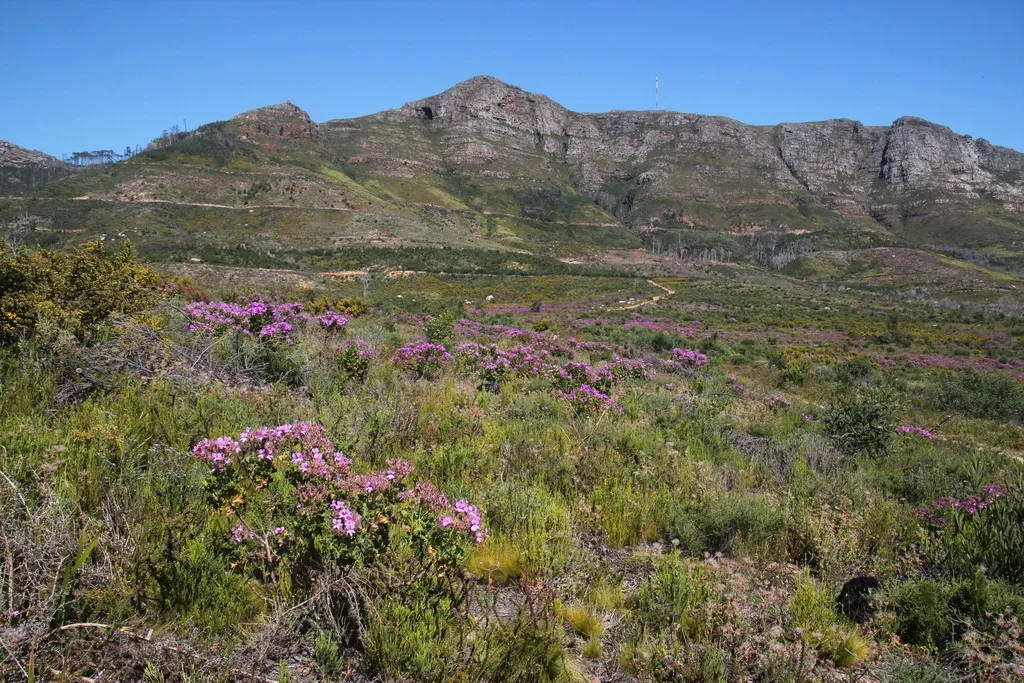
There are many published papers and much anecdotal evidence showing that fynbos plant species can persist as living plants decades after pine afforestation and as dormant seed 130 years after afforestation.
Decades-long persistence in dormant, soil-stored seed banks is a feature of many, if not most, fynbos plants. Fire, which reduces the fynbos plant mass to ash and exposes the soil to ambient energy regimes, is the major cue for the germination of the dormant seeds.
Given the stochastic nature of fire regimes, there will always be patches of fynbos that escape fire for many decades. Where these patches support dense stands of tall proteas and conebushes, the soil is deeply-shaded: darker than under any pine forest.
So, in many respects, we can think of a cluster or radiata pine as an outsized protea, casting shade and inhibiting germination in a way very similar to how tall conebushes and proteas behave. When the plant cover is removed – felled or burnt – seedlings emerge from the soil-stored bank. A more open fynbos community is restored. The cycle repeats – or doesn’t (the proteas get wiped). Fynbos is resilient to these flows.
This is not to say that restoring fynbos to a pre-invasion condition (with good representation of all guilds of species) is straightforward. Disturbance associated with removal of the huge biomass of pines, the massive soil-stored seed banks of invasive wattles, and unplanned fires can greatly complicate restoration aims.
The Friends of Tokai Park NPO, together with SANParks and other partners, have had great success in restoring an adjacent Cape Flats Sand Fynbos area that was under pines for over a century, and this bodes well for conserving this critically endangered system that is currently under pines.
Professors Richard Cowling and Dave Richardson are A-rated scientists whose specialties include both fynbos ecology and invasion biology. They were the co-authors of the 1995 book, Fynbos: South Africa’s Unique Floral Kingdom, published by Fernwood Press and, between them, have published hundreds of peer-reviewed papers on fynbos and on invasion biology.